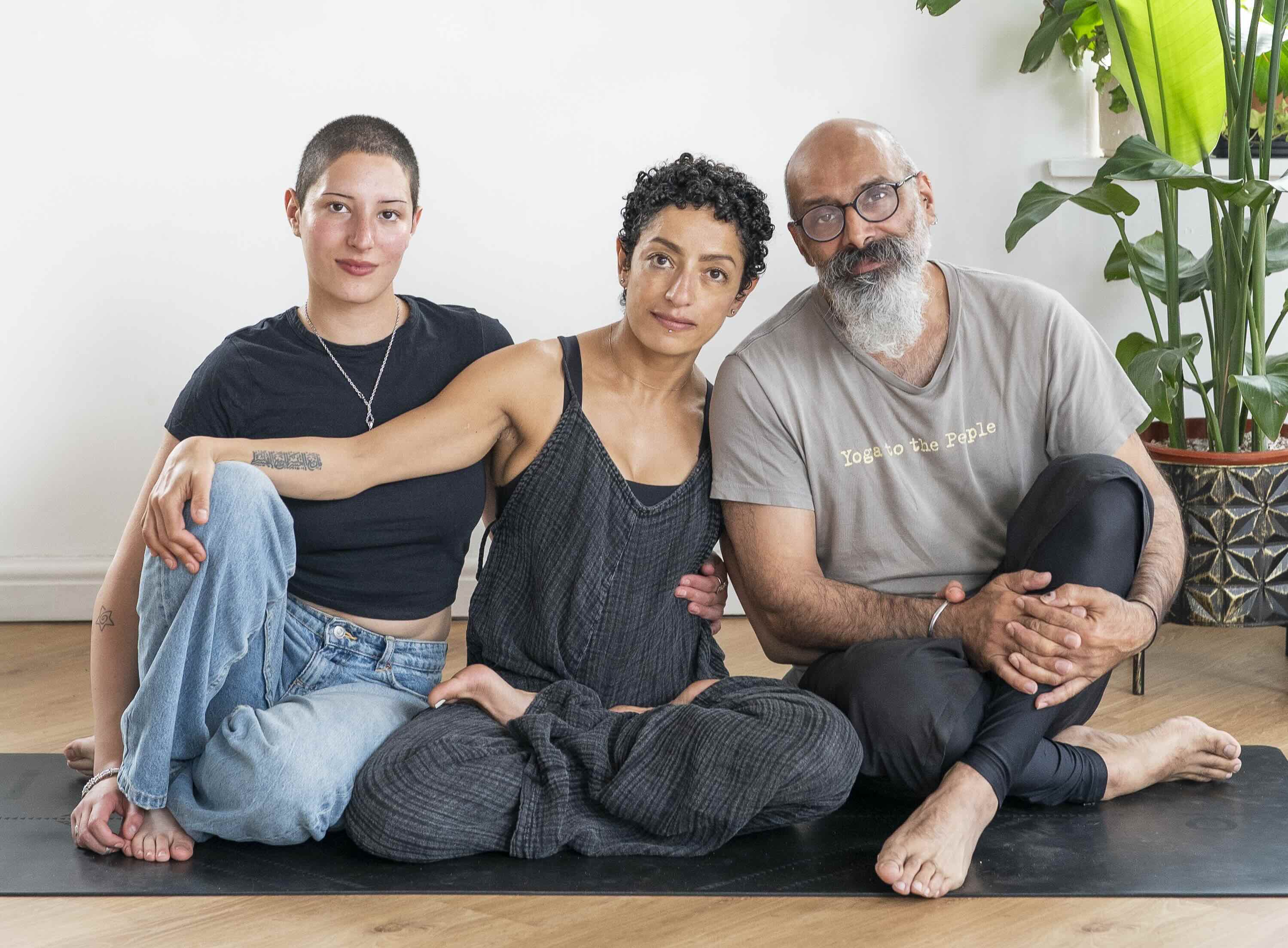
Can We Hold a Yoga Space Without Playing the Social Media Game?
There’s a quiet contradiction at the heart of modern yoga.
We practice an ancient discipline rooted in stillness, introspection, and non-attachment—yet we attempt to share it through platforms designed for speed, visibility, and constant validation.
We’ve been thinking a lot about yoga and social media lately—about the constant sense that we should be showing up, posting more, staying visible. And if I’m honest, I find it hard.
Not just in a practical way (although keeping up is exhausting), but in a deeper, more uncomfortable way. Something about it feels at odds with why we practise and teach yoga in the first place.
It’s not an easy space to reconcile.
The Pressure to Perform
There’s also a particular kind of exhaustion that comes with trying to keep up with social media. Not always dramatic—sometimes it’s just a low, persistent hum in the background. The sense that you should be doing more, sharing more, being more visible.
We’ve felt that tension too.
And if I’m honest, it’s not that we’ve simply chosen to step away from doing what we’re “supposed” to do—we’ve actually tried. We’ve experimented with posting more, with sharing more, with finding ways to fit the practice into something that works on these platforms.
But it never quite sits well. Something feels slightly off in the process of translating it—reducing it, shaping it into something quick, visible, and easily consumed.
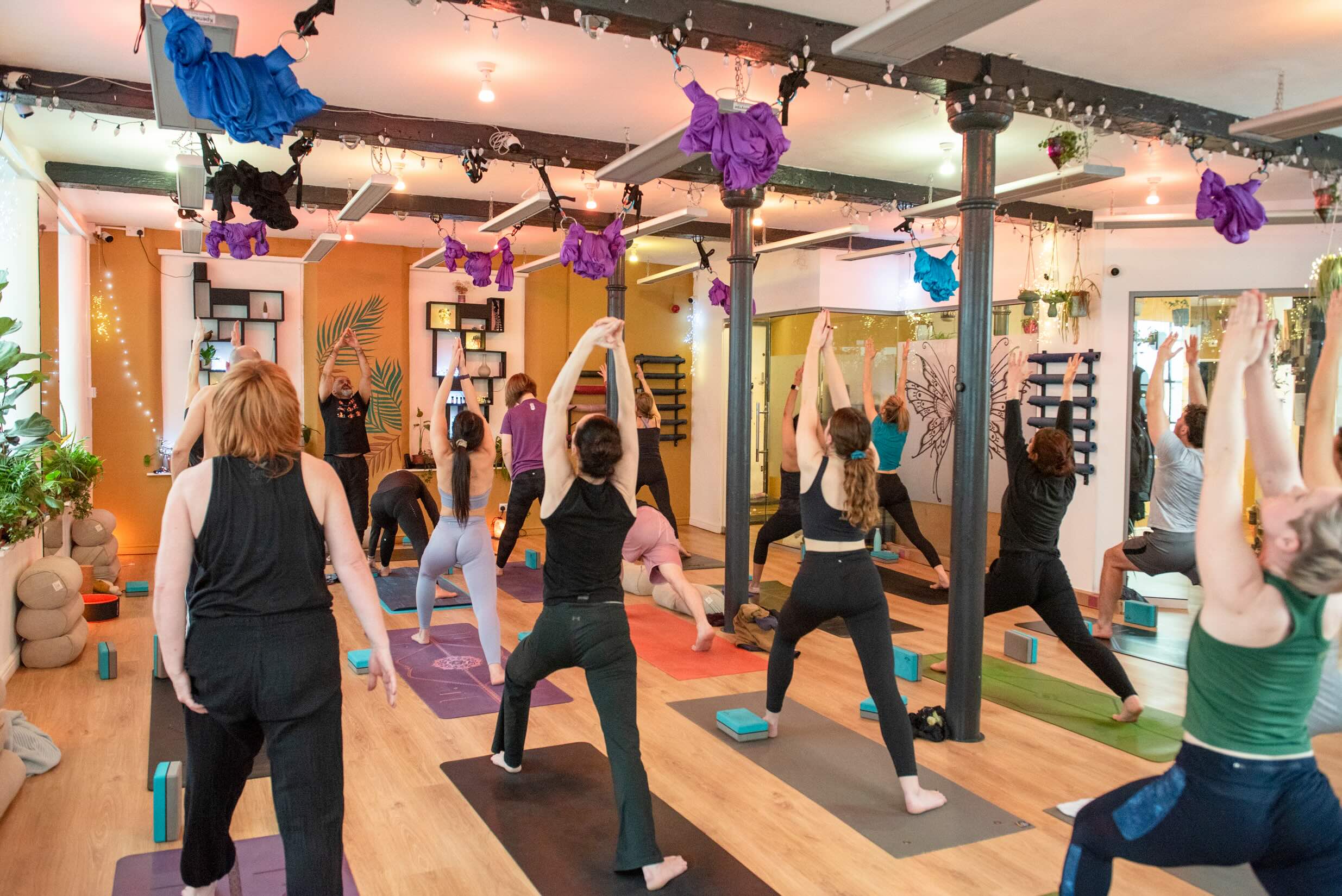
So over time, what we share has become much simpler. We let people know what’s happening in the studio—classes, trainings, the rhythm of what we offer. Things as they are, without trying to turn them into something more.
And quite often, we’re told this isn’t enough. That we’re not using social media properly. That if we really wanted to reach more people, we’d need to do what other, more “successful” studios do—be more visible, more instructional, more performative. That, without that, we’ll remain small, local, limited.
And maybe, in one sense, that’s true.
But engaging in that way would also mean changing something quite fundamental: presenting yoga differently—more polished, more simplified, more easily consumed.
And that’s where the strain begins to show.
Even when we try to stay grounded, social media can subtly shape how we relate to practice. We might notice a pull towards more “post-worthy” shapes, or a quiet awareness of how something might look from the outside. Comparison slips in almost unnoticed.
Choosing Not to Show Everything
There’s something about not sharing everything that feels important.
Not every posture needs to be photographed, and not every insight needs to become something we put out into the world. Some parts of the practice lose something when they’re externalised—flattened slightly, simplified in ways that don’t quite reflect how they’re actually lived.
So choosing not to share is gradually becoming intentional. Especially when it comes to more challenging asanas, or trying to explain something complex in a few lines. It’s not about withholding, but about recognising that not everything translates well—and not everything is meant to be replicated.
In a way, it keeps the practice more open. More individual. Less defined by appearance or achievement.
It also brings a certain humility. A reminder that yoga isn’t something we package or present as ours, but something we stay with over time—through repetition, through limitation, through change. Without the pull to document or share, the practice becomes more immediate, less observed.
There is a quiet relief in not needing to turn our practice into anything else. Just practising, as it is. And often, that’s when it feels most honest.
A Different Kind of Presence
This isn’t to say that social media has no place in yoga.
Social media can help people find a practice, a teacher, a space that resonates. It can connect people who might never otherwise meet. It can support a sense of community in meaningful ways.
But yoga asks us to look not just at what we do, but how we do it.
The logic of social media is built around visibility, speed, and accumulation—more reach, more engagement, more growth. Yoga, in contrast, invites aparigraha—a loosening of grasping—and a movement away from needing more.
So perhaps the question is not whether we use these platforms, but how we relate to them. Not “What should we post?” But “What feels true to share?”
What supports practice, rather than turning it into performance?
What might be better left unspoken, or simply experienced without needing to be made visible?
Because not everything needs to be shown to have value.
Returning to the Ethos
At its heart, yoga invites us inward—towards santosha, a quiet contentment with what is, and aparigraha, a gentle loosening of the need for more.
It asks for abhyāsa—the steady return to practice—and vairāgya, a letting go of grasping, whether for achievement, recognition, or approval.
And at the centre of this is ahimsa. Not just in the obvious sense of not causing harm, but in the subtler ways we relate to ourselves—stepping away from comparison, from pressure, from the idea that the practice must look a certain way to be valid.
In that sense, stepping back from the pressure to constantly produce or perform isn’t a withdrawal from teaching. It may be a way of practising it more honestly.
And perhaps this is where we’ve found some clarity for ourselves. We are a small studio. Of course, we would love to grow. But not at any cost, and not in a way that asks us to reshape the practice into something it isn’t.
What we have feels meaningful in a different way.
We have a community we know. People who show up, again and again, with their own lives, their own complexities. There is trust there. A sense of belonging that builds quietly over time. What we offer matters. But equally, what they bring matters just as much. There is purpose in that exchange. Something steady, reciprocal, and real.
And for us, that feels enough.