

Why I No Longer Celebrate International Yoga Day
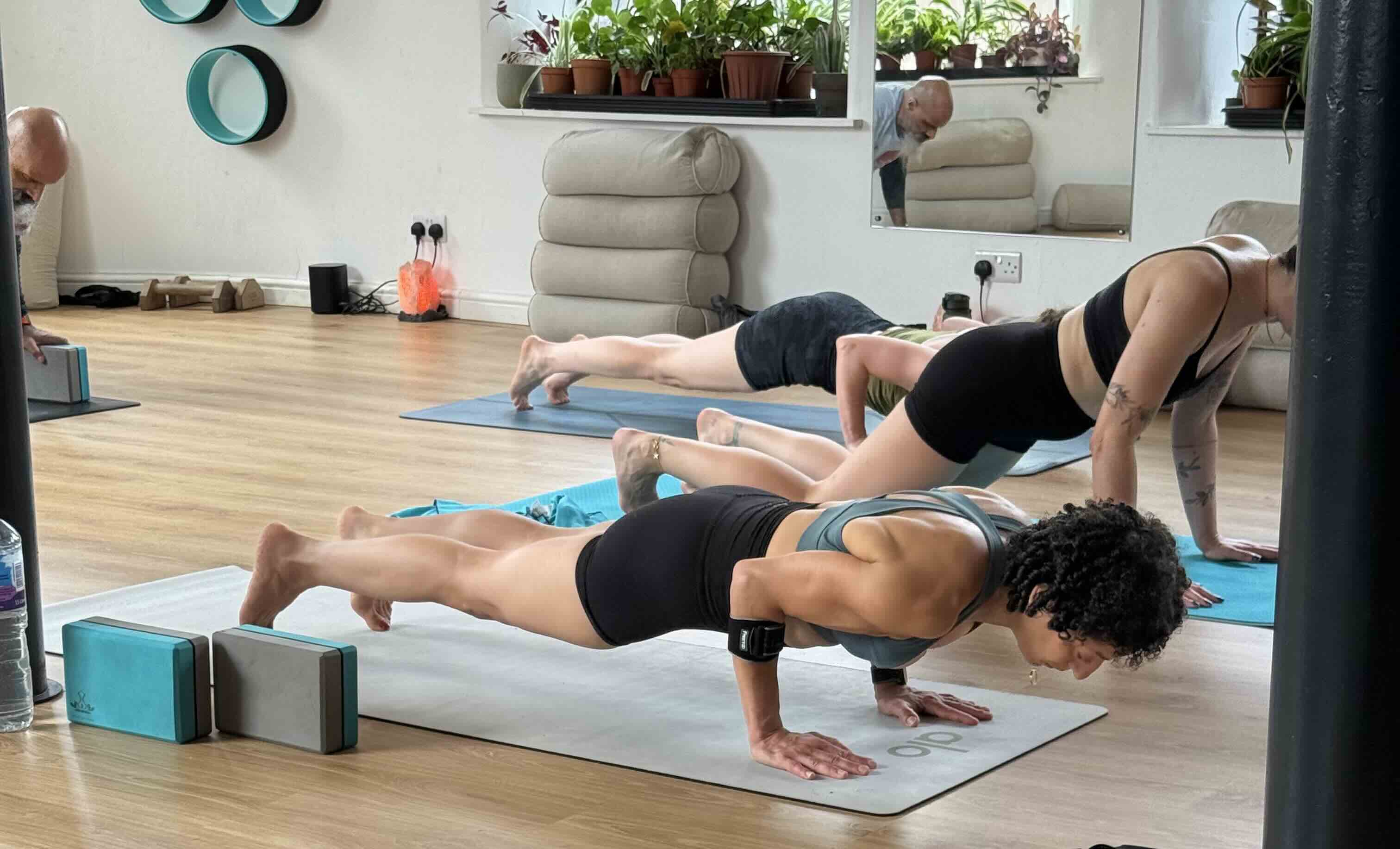
Until just a few years ago, I used to celebrate International Yoga Day.
Not exactly with mass gatherings in matching outfits or synchronised sun salutations in public squares (the thought alone makes my nervous system twitch — and possibly my hamstrings). I marked it more quietly — as a personal acknowledgement of a way of being that has shaped my body, my mind, and something more subtle in between: the field of sensation and awareness through which experience unfolds.
Yoga, for me, was never about being seen. It was about seeing — more clearly, more honestly, and sometimes more uncomfortably than I would have preferred: noticing the fluctuations of the mind, the habits of the body, and the quieter layers of sensation and awareness that usually escape attention.
And yet, somewhere along the way, I stopped marking the day altogether.
When Yoga Gets… Complicated
This wasn’t a dramatic act of protest. No manifesto, no Instagram announcement — just a gradual, uneasy realisation that something about International Yoga Day no longer sat comfortably with me.
Part of that discomfort lay in understanding how the day itself came into being. International Yoga Day was proposed by Indian Prime Minister Narendra Modi in 2014 and quickly adopted by the United Nations, after which it began to be marked globally through large-scale, often state-sponsored events. What emerged was not just a celebration of a way of life, but also a carefully curated display of cultural heritage and national identity.
Yoga — rooted in inwardness, in detachment, in the softening of the ego’s grip — began to feel increasingly entangled in outward expressions of identity, power, and politics. What is, philosophically, a path of liberation (moksha) seemed, at times, to be drawn into narratives of ownership, nationhood, and soft power.
There is a quiet dissonance in that — when a way of life that invites us to loosen identification becomes a means of reinforcing it.
It’s a bit like trying to practise detachment while holding very tightly to the idea that this is ours.
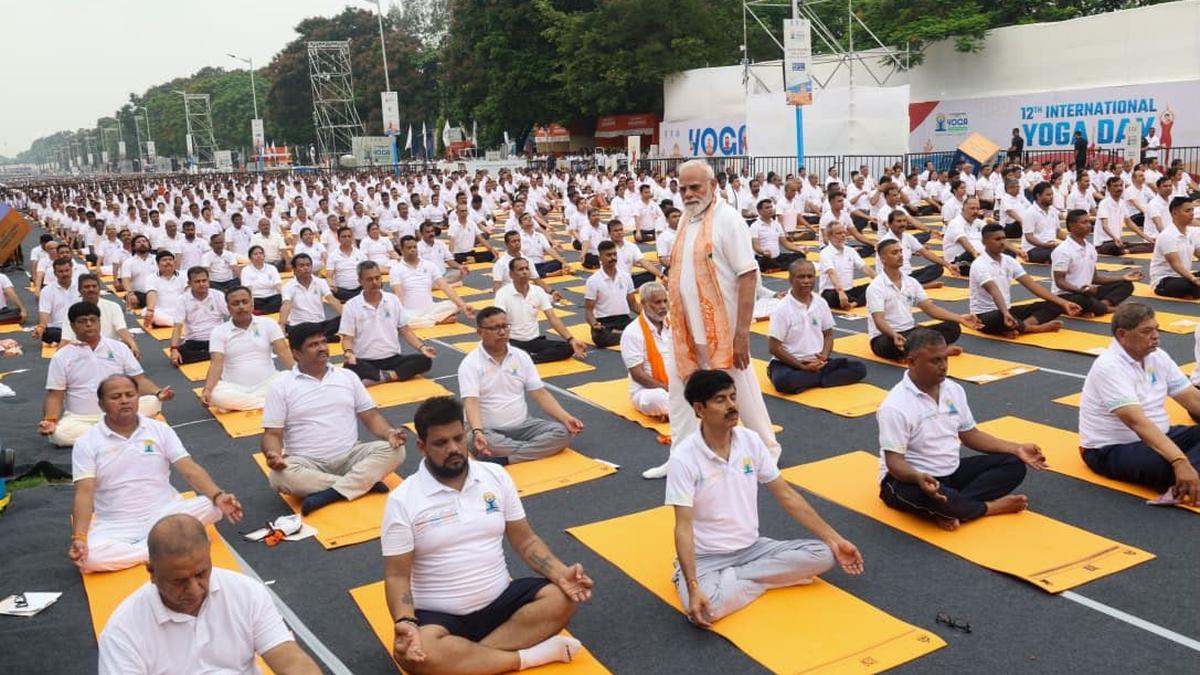
Prime Minister Narendra Modi at the Yoga Day programme held at Kolkata’s Red Road on June 21, 2026. Credit: X/@narendramodi
Yoga in Translation: Orientalism, Appropriation, and Power
At the same time, my unease with the politicisation of yoga cannot be disentangled from another, longer history: how yoga has been translated, reshaped, and consumed within Western contexts.
What often passes as yoga in the West is marked by a familiar orientalist logic — one that selectively extracts, simplifies, and reimagines complex South Asian traditions into something more legible, marketable, and, importantly, sellable. In this process, yoga is frequently stripped of its philosophical, ethical, and spiritual dimensions, reduced instead to posture, wellness, and aesthetic (and occasionally very expensive leggings).
It becomes widely available, yet often at the cost of the depth and context that once grounded it.
This is not an innocent transformation. It reflects longer colonial histories in which knowledge systems are appropriated, decontextualised, and repackaged within dominant frameworks of value and consumption. The global yoga industry continues to operate within these patterns — privileging certain bodies, voices, and forms of legitimacy while marginalising others.
And yet, the response to this cannot simply be a reassertion of ownership framed through the nation-state. If Orientalism flattens and appropriates, nationalist claims risk fixing yoga within equally rigid boundaries — recasting a historically fluid and evolving way of life as the property of a singular identity.
Both, in different ways, set limits on something that has always moved, adapted, and existed in relation to those who practise it.
Perhaps yoga resists both these impulses — or perhaps it simply keeps exposing how attached we are, even when we are convinced we are not.
The Practice That Resists Display
At its core, yoga is deceptively simple — and profoundly difficult.
It asks us to be still (already a challenge), to observe the mind (more challenging), and to soften our attachment to what we find there (nearly impossible on some days — or most days, if we are honest). It also asks us to attend to something subtler: the layers of breath, sensation, and awareness that shape how we experience ourselves and those around us.
Patanjali’s well-known definition — “yoga is the stilling of the fluctuations of the mind” — rarely trends. It doesn’t lend itself to spectacle. It also doesn’t come with before-and-after photos.
There are no medals for noticing your thoughts.
No applause for staying with your breath when you would rather be somewhere else.
No audience for the slow, uneven work of loosening the grip of the ego.
And yet, this is where something shifts — not just internally, but relationally. In how we respond, how we listen, how we sit with others (and with ourselves) without immediately trying to fix, perform, or withdraw.
A Studio Shift: From Calendar to Cosmos
A few years ago, as a studio, we made a quiet but deliberate shift.
We stepped away from organising anything around International Yoga Day and began paying closer attention to the rhythms already shaping our practice. The seasons offered a different kind of orientation — one that unfolds gradually and is shared, whether we are paying attention or not.
Over time, this became a more grounded way to gather. It placed us in relation — to each other, to time, and to something beyond the studio walls.
Around this time of year, we come together to mark the summer solstice — the longest day. A moment that feels full, expansive, and, if you pause long enough, already beginning to change.
We practise through 108 sun salutations, moving together and individually at once — each person negotiating their own pace, their own limits, their own internal commentary (which, at some point, tends to get quite persuasive).
Yes, 108. I know.
108 Sun Salutations (Or, A Lesson in Humility)
For those unfamiliar, repeating 108 sun salutations is both a physical and existential experience.
The number 108 holds symbolic significance in many yogic traditions. But in practice, somewhere around salutation 47, most of us are less concerned with cosmology and more concerned with basic arm functionality.
And yet, something happens in the repetition.
The first 20 feel manageable. The next 30 feel… negotiable. Somewhere in the 60s, the mind begins bargaining (“surely intention counts as extra repetitions?”). But if you stay — breathing, moving, pausing when needed — something shifts.
It stops being about completion.
It becomes about presence.
People rest. Modify. Laugh. Exchange those brief, knowing glances that say, without words, we agreed to this. And in that shared, imperfect experience, something relational emerges — not polished, not performative, but real.
And that, to me, feels much closer to yoga.
A Different Kind of Celebration
So while International Yoga Day continues to be marked across the world, I find myself elsewhere — on a mat, in a room with others, moving through sun salutations with varying degrees of grace (mostly varying).
This isn’t a rejection of yoga. If anything, it is a return to it.
A quieter, less performative, more relational way of living — one that continues long after the mat is rolled up.
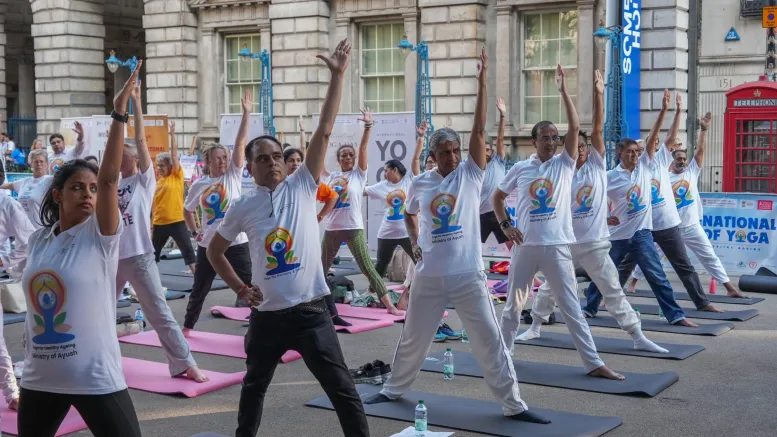
No Grand Conclusion (Because Yoga Rarely Offers One)
I don’t necessarily think everyone should stop celebrating International Yoga Day. But I do think it is worth asking: what are we actually celebrating?
Yoga, at its heart, is not a day. It is not a display. It is not even a fixed identity. It is a way of being — a philosophy, a way of moving through the world, of relating to the body, the mind, and something more subtle that sits between and beyond them.
It is lived, rather than performed.
And often lived imperfectly — which, perhaps, is part of the practice.
And sometimes, it looks like stepping away from the stage…
and greeting the sun instead.