

Beyond the Pose: An Interview with Jake Duckworth
Drawing on over twenty years of practice and teaching across multiple traditions, Jake Duckworth shares his thoughts on what yoga is, what it is not, and why its deepest lessons extend far beyond the pose.
Interviewed by Hind Elhinnawy · for Deep Yoga
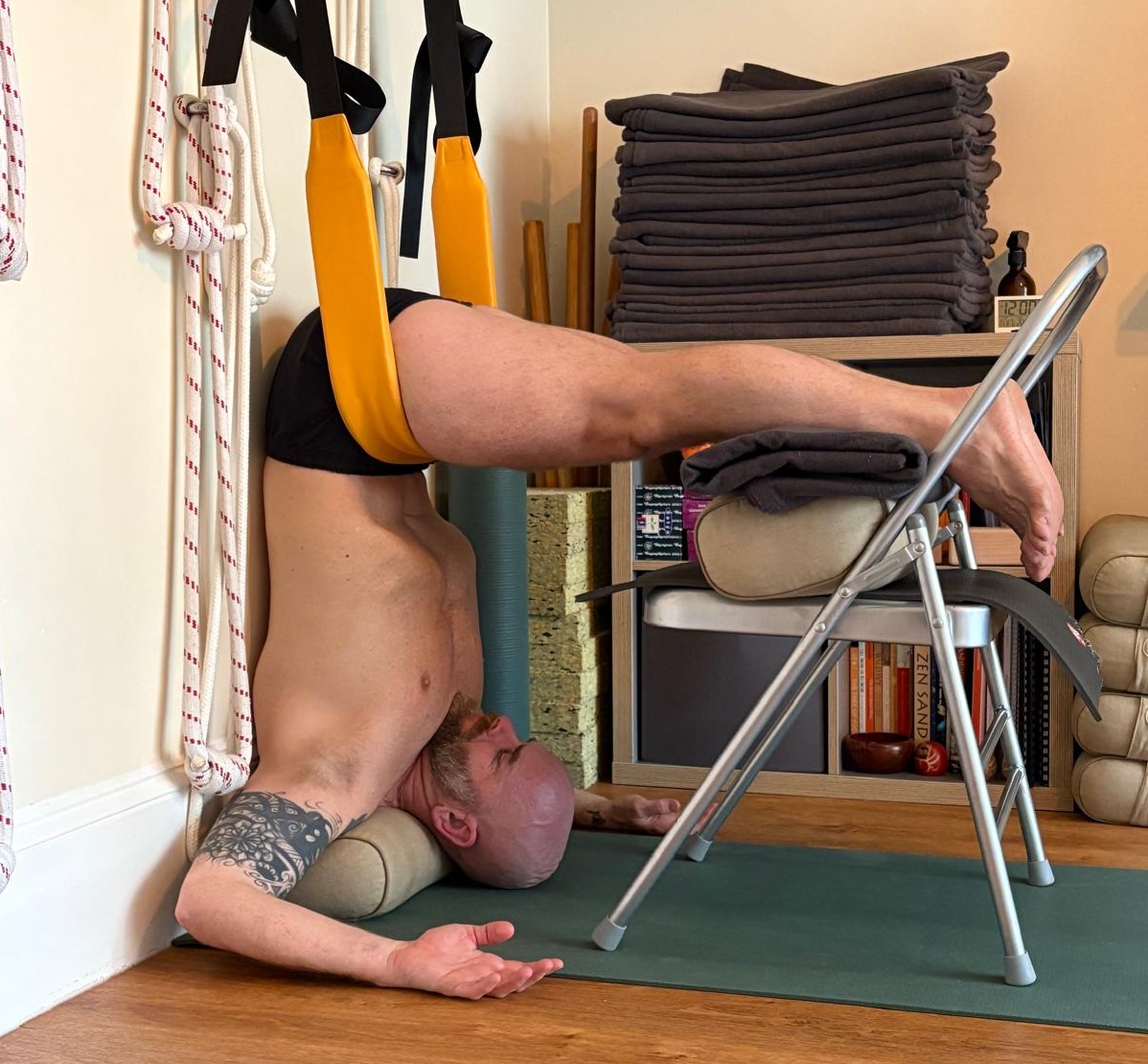
"Yoga is not about how flexible you are — it is about breath, attention, and a long-term commitment to a holistic practice."
— Jake Duckworth
Every experienced yoga teacher has a story, but what I find most interesting is how that story continues to evolve. When I sat down with Jake Duckworth, I was struck not only by the breadth of his experience, but by the way he speaks about yoga as an ongoing process of learning, questioning, and discovery. What began in 2003 as a way to support his martial arts training gradually developed into a lifelong exploration of yoga’s physical, philosophical, and spiritual dimensions.
For the first interview in our Deep Yoga interview series, I spoke with Jake about that journey. Our conversation ranged from common misconceptions about flexibility and social media to breath, adjustments, philosophy, and what it really means to sustain a practice over a lifetime.
Jake's yoga journey
A practice built over two decades
Jake first came to yoga in 2003 through martial arts. At the time, his motivation was simple: he wanted to improve his flexibility and move more efficiently. What began as a complementary practice, however, gradually became something much deeper.
After a period away from yoga, injuries sustained through powerlifting led him back to the mat in 2015. It was during this time that he discovered Ashtanga Yoga through Joy Miles, a teacher who would have a significant influence on his practice and understanding of yoga.
Seeking a deeper connection to the tradition, Jake later travelled to Rishikesh, India, to undertake teacher training. Rather than viewing the course simply as a route into teaching, he approached it as an opportunity to immerse himself fully in the practice and explore yoga beyond the physical postures.
Today, Jake teaches around a dozen classes each week, drawing inspiration from Ashtanga, Hatha, and Vinyasa Krama. He continues to be a dedicated student himself, studying Iyengar Yoga with Christian Pisano and maintaining a strong commitment to lifelong learning and practice.
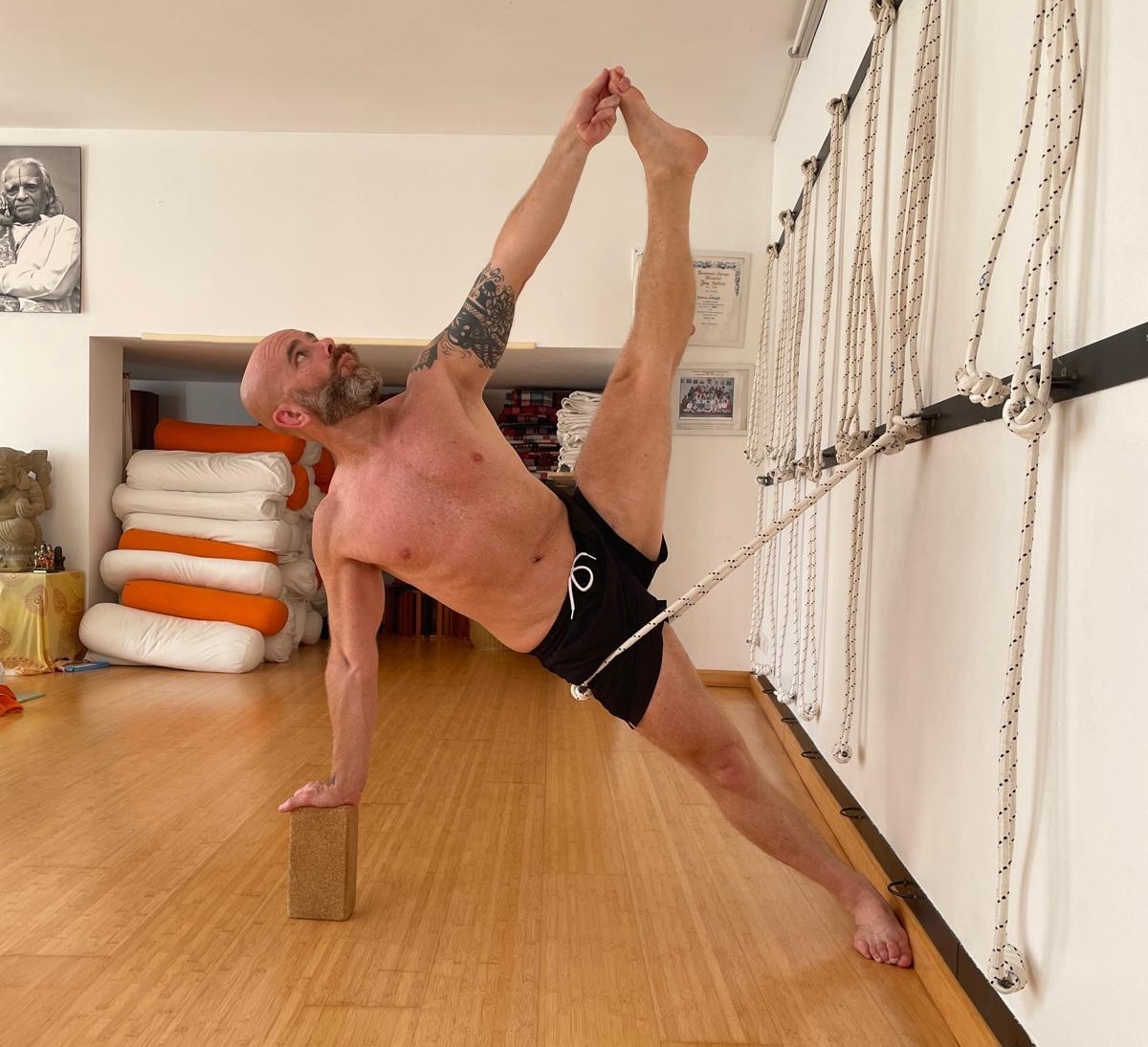
Myths vs reality
Challenging common misconceptions about yoga
When I asked Jake about the biggest misconceptions he encounters as a teacher, several themes emerged. Many of these myths can discourage people from stepping onto the mat in the first place, particularly men who may feel yoga isn't "for them."
Myth
“You need to be flexible before starting yoga.” Many prospective students avoid classes entirely because they believe yoga demands pre-existing flexibility.
Reality
Yoga is a practice for developing flexibility, strength, and stability together. The mat meets you exactly where you are — no baseline required.
Myth
"Yoga is primarily about flexibility." Modern Western classes often skew toward stretching, making strength, breathwork, and philosophical dimensions feel invisible.
Reality
Traditional yoga integrates strength and stability alongside flexibility. Developing flexibility without adequate strength is a common route to injury. Yoga is also a rich philosophical and meditative system.
Myth
"Social media shows what yoga really looks like." Highly edited images of advanced poses set unrealistic benchmarks that discourage beginners.
Reality
Social media curates the external appearance of yoga — often manipulated content — whilst real practice is an internal, deeply personal experience. Comparing your inner journey to someone else's highlight reel is fundamentally misleading.
"People compare their internal experience with others' external, often manipulated content — and that is a recipe for frustration, not progress."
— Jake Duckworth
Teaching philosophy
The three pillars of Jake’s practice
Drawing on ideas encountered through his studies with Christian Pisano and Joe Miles among others, Jake described three interconnected principles that continue to inform both his practice and teaching.
Vinyasa
The synchronisation of breath and movement — every transition is guided by the rhythm of inhalation and exhalation.
Vinyasa krama
Connecting postures with sustained breath awareness — building intelligent sequences that honour the body's natural progression.
Often translated as "wise progression", this principle involves sequencing postures intelligently and purposefully. Each stage of the practice prepares for what follows, respecting the body's natural development rather than forcing outcomes.
Viniyoga
Individualised practice tailored to each student's specific needs, current physical state, and personal goals.
An approach that adapts the practice to the individual. Rather than applying the same approach to everyone, yoga is tailored to the practitioner's needs, circumstances, abilities, and stage of life.
What Jake Would Like to See More of in Modern Yoga Teaching
1
Shift the gaze inward. Teaching should focus on the internal experience of each pose — sensation, breath, and awareness — rather than how a posture appears from the outside.
2
Emphasise practice over performance. The value of a session lies in what it does for the practitioner, not in the impressiveness of the shapes achieved.
3
Reconnect asana with yoga's deeper roots. Physical postures are one thread in a much richer philosophical and spiritual tapestry that modern classes often omit.
On adjustments
When discussing hands-on adjustments, Jake emphasised the importance of sensitivity and individualisation. Rather than using adjustments to push students deeper into a posture, he spoke about working with the breath and supporting the student's experience of the practice. He also highlighted the need to adapt both adjustments and alignment cues to the individual, recognising that what is helpful for one person may not be appropriate for another. At the heart of his approach is a simple principle: understanding the practitioner in front of you is more important than achieving a particular shape.
"Over time, practitioners become less reactive, more comfortable with discomfort, and better at regulating their emotions. That is real progress — invisible to any camera."
— Jake Duckworth
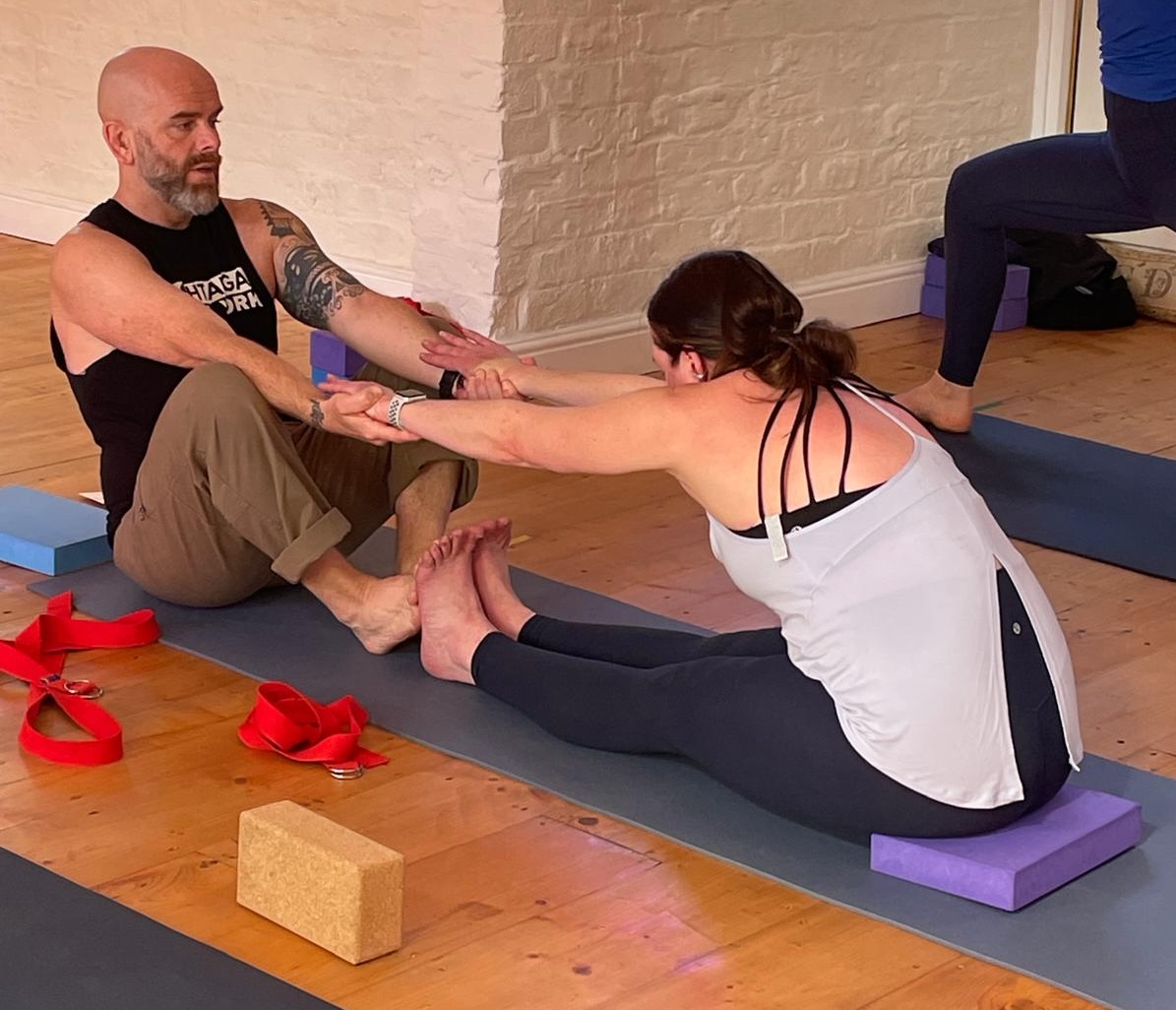
Making yoga more inclusive
Jake also spoke candidly about the challenge of attracting and retaining men in yoga spaces. Throughout our conversation, he returned to the importance of helping practitioners move beyond comparison and performance, and instead focus on their own experience of the practice. For Jake, yoga becomes sustainable when people stop measuring themselves against others and begin developing a more personal relationship with what happens on the mat.
He also emphasised the importance of community. Whilst yoga is ultimately an individual practice, feeling connected to a wider community can provide encouragement, support, and a sense of belonging. For Jake, it is this combination of personal practice and meaningful connection that helps people continue showing up year after year.
Ultimately, he believes that lasting commitment comes not from mastering advanced postures, but from cultivating a genuine connection to the practice itself. As he put it,
"Focus on the practice as a whole, not specific poses. Connection to practice and community is what endures."
As our conversation came to an end, I found myself reflecting on just how much Jake's approach embodies the kind of yoga we value at Deep Yoga: thoughtful, grounded, and rooted in genuine practice rather than performance. It was a pleasure to hear about his journey and the lessons he has gathered along the way.
We are incredibly excited to welcome Jake to Deep Yoga for a workshop later this year. If this interview has sparked your curiosity, I hope you'll join us. There is no better way to get to know a teacher than to spend time practising with them, and I have no doubt Jake will offer plenty of inspiration, insight, and food for thought.
Deep Yoga · Interview Series